
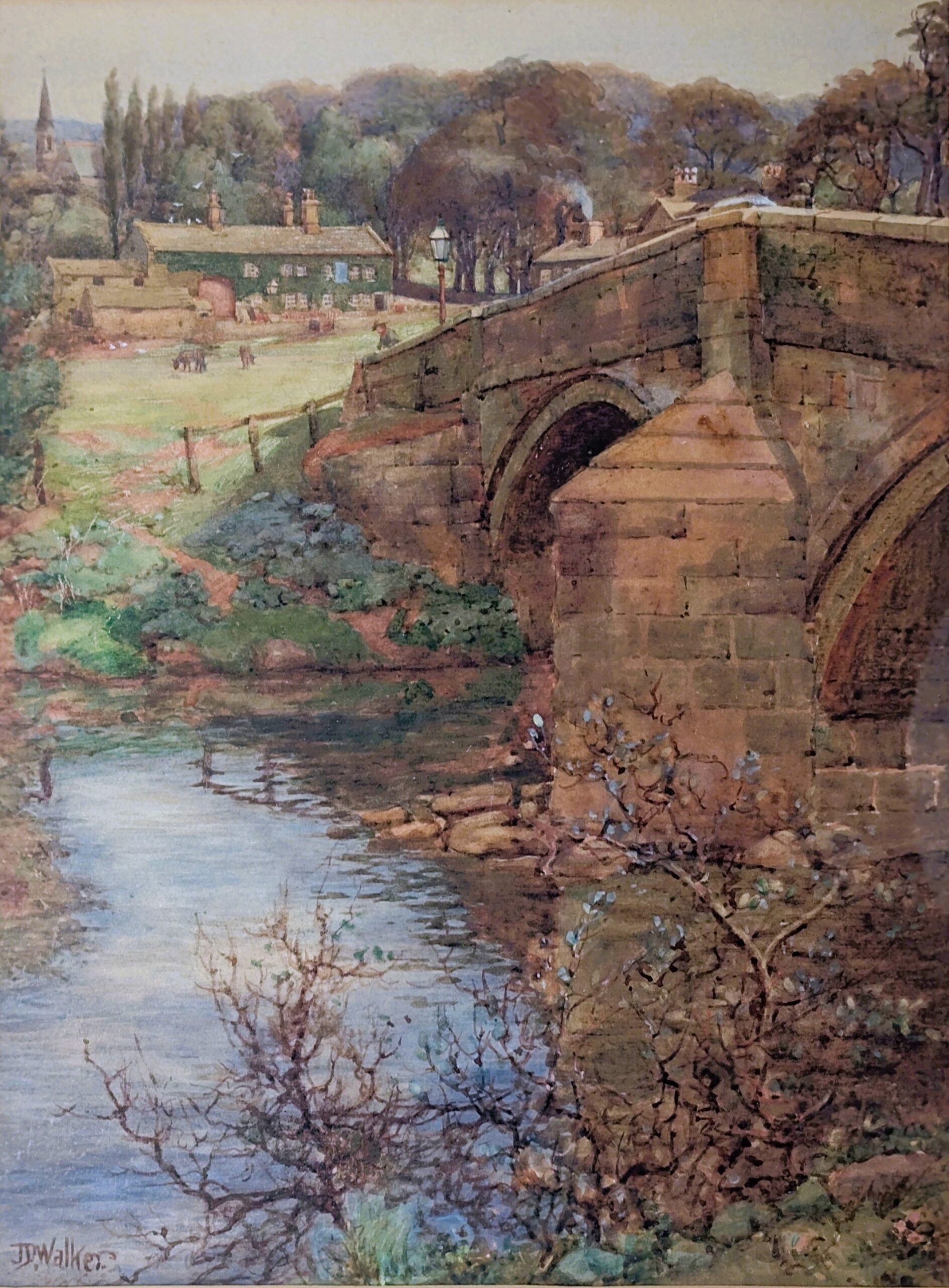
Apperley Bridge by John Dobby Walker. Image by courtesy of David Starley, The Bingley Gallery.
The artist, John Dobby Walker (1863-1925), was born in Leeds but spent most of his working life in the Bradford district.
His parents, William and Charlotte, moved soon after John’s birth to the Bowling area of Bradford, where William worked as a warehouseman in the textile industry. John was one of six children in the family and his middle name, Dobby, was his mother’s maiden name.
John showed artistic talent from an early age. But as with many other artistic children from working class backgrounds at that time, his talent was channelled into a relevant craft occupation. After leaving school he started his working career as a coach trimmer and painter at Sheethams, a local coach building firm. His first piece of independent art work was painting a crest on a carriage.
However, he also studied painting in his free time at the Bradford Church Institute and by 1891 he was working as an art teacher in a local school. He continued teaching, but also painted in his free time and by 1911 was working as a freelance artist painting, mainly landscape views. He lived in the Undercliffe area of Bradford and his work is characterised by its fine detail and subtle colouring
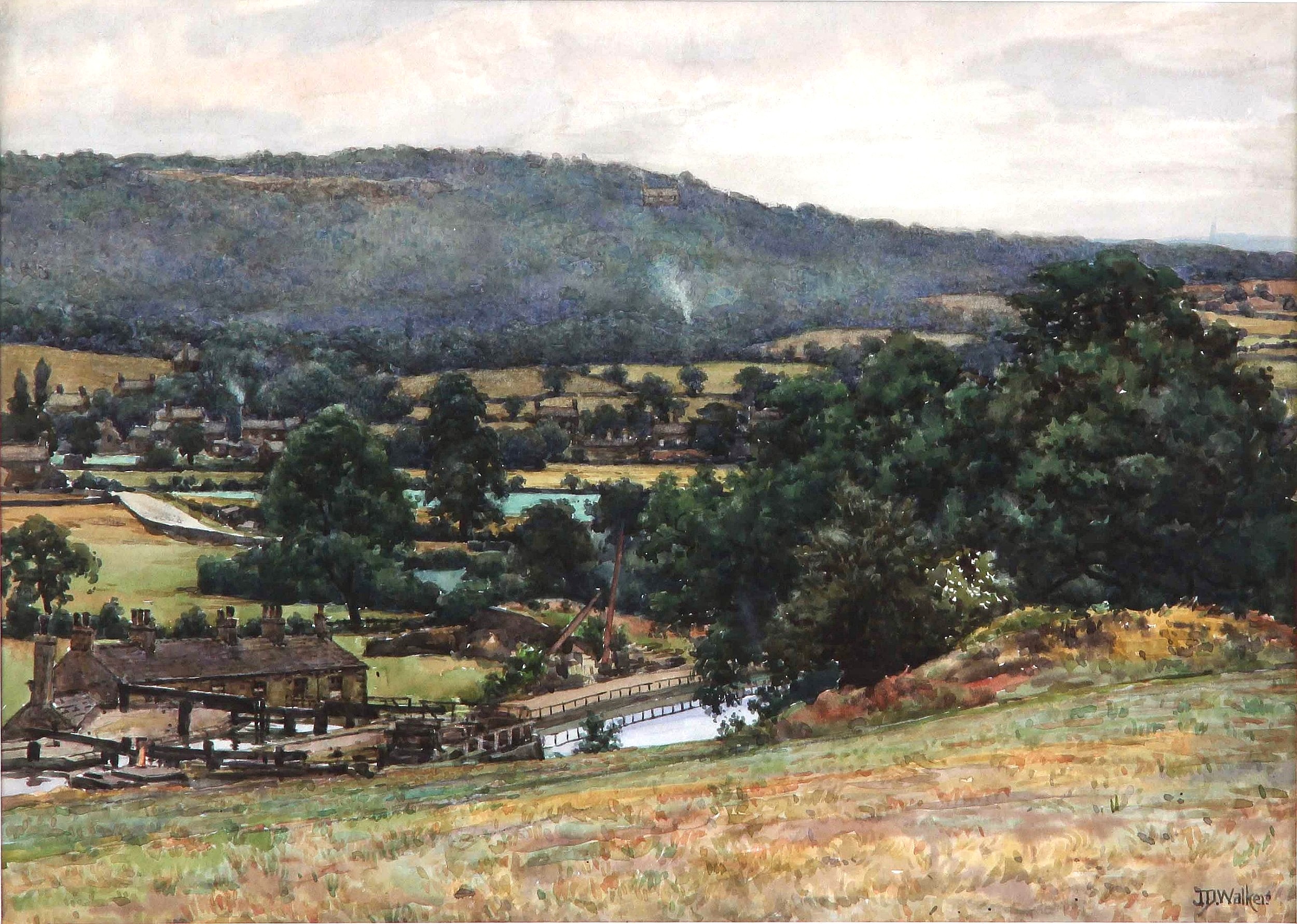
‘Leeds-Liverpool Canal, West Riding of Yorkshire’. Image: in a private collection.
In addition to painting in England and Scotland, he visited Holland, Spain, Italy, painting scenes from his travels, and he exhibited at the Royal Academy, Royal Institute of Painters in Watercolour, the Walker Art Gallery, Liverpool, and shows of the Yorkshire Union of Artists. The Dowager Empress of Russia bought two of his paintings from a Royal Academy show.
The Bradford Museums and Galleries collection also acquired his work at one time, and it can be found in the collection of Richmond Town Hall, North Yorkshire (see below).

‘Richmond Castle’. image: Richmond Collection/Art UK
In 2001 the Harrogate art dealer, Paul McTague, held an exhibition of over 100 of John Walker’s watercolours. McTague told the local newspaper that despite his extensive European travels, the artist was ‘very much inspired by Yorkshire – particularly scenes around Bradford’ (Telegraph & Argus, 16/10/2001). He added that:
[Walker’s] fine draughtsmanship and good sense of colour are especially evident in pictures of his own neighbourhood around Eccleshill, Woodland Hills and other parts of the former West Riding. He was a master of capturing the character and atmosphere of local landscapes.
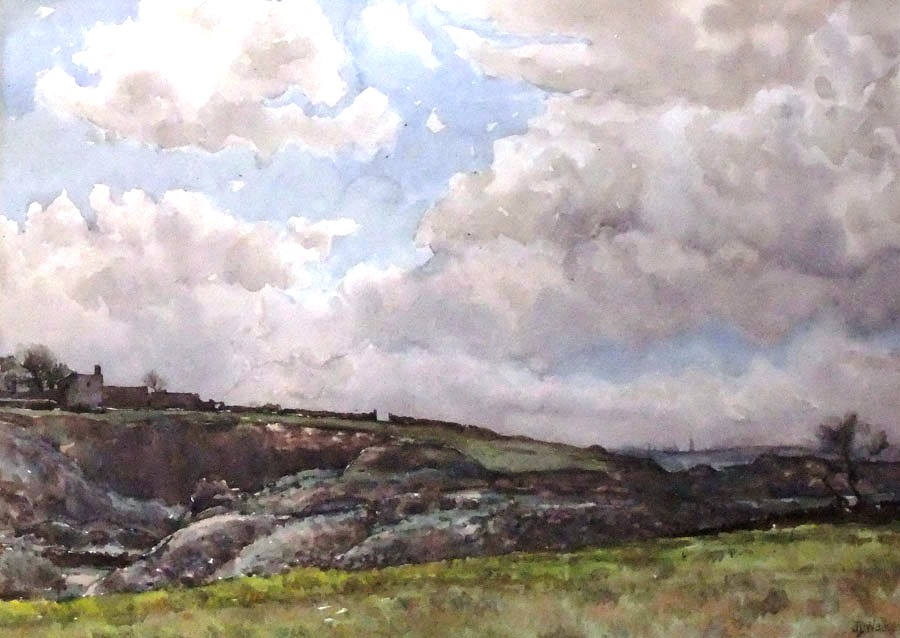
Bolton Quarries (Bradford). Image: McTague of Harrogate (Art Dealers).
John remained single and spent his last years living with his unmarried sister at Kilburn, North Yorkshire, where many of his later watercolours were painted. He died in July 1925 and was buried at Nab Wood Cemetery, Shipley.