

‘An Interrupted Picnic’ is a painting by Charles Sims, dated 1901, in the Bradford Museums and Galleries collection and in 2025 was on display at Cliffe Castle, Keighley. It depicts a group of adults and children in the foreground making preparations to leave a picnic site as a storm sweeps in from the left.
The picnic-makers are clearly from an affluent social background: three children, led authoritatively by a smartly-dressed woman, are hurrying toward a smart carriage. This is harnessed to two horses and is driven by a top-hatted driver, who looks back towards the approaching storm. The woman leading the children is dressed in black, which might suggest she is a governess, as the colour of her gown is in contrast to two other women nearby. These women are dressed in brighter colours, and one is holding a red parasol that is swept by the wind, as is her white dress. Two other, but more plainly dressed adults, most likely servants, are kneeling on the ground gathering the picnic items together, including a ground sheet that appears to be buffeted by the wind.
The scene is observed and painted as if some distance away and looking down on the group. Two-thirds of the painting depicts the sky; the middle section illustrates the land beyond the picnic group, with the sea shown in the distance. A bolt of lightening is shown emerging from ribbons of black clouds to the left. The thunder-clouds cast a shadow over the land beyond the picnic group as they steadily advance.
The painted can be interpreted and appreciated at different levels. On one level it can be viewed as a skilful depiction of the sky and land: the clouds are magnificently illustrated, and the approaching storm presents an awesome natural phenomena that is captured well by the artist. The viewer can understand the haste and frustration of the picnic group forced to leave before the storm reaches them. Their pleasant summer picnic has been ruined by the weather; a familiar enough experience for most of us in Britain!
At another level it can be seen in the tradition of earlier landscape artists, such as Turner and Cotman, as depicting the sublime enormity and majesty of nature, rendering the picnickers insignificant in the overall scheme of things. The foreshortening of the carriage in the scene – reducing it by half – adds to this sense that the people are transitory and inconsequential in the constant landscape. Their affluence has no impact on the approaching force of nature; indeed they are powerless before it.
Yet another interpretation could be in relation to the date it was painted: 1901. The twentieth-century was in its infancy and Queen Victoria had died in January of that year. With her death came the end the Victorian era in Britain, and a new Edwardian and modernist period emerged. Britain was still at war in South Africa against the Boers, with no end yet in sight. An approaching storm – upsetting the conventions of a middle-class picnic – might therefore have symbolic connotations at that time, reflecting all uncertainties of the new century ahead.
The Artist
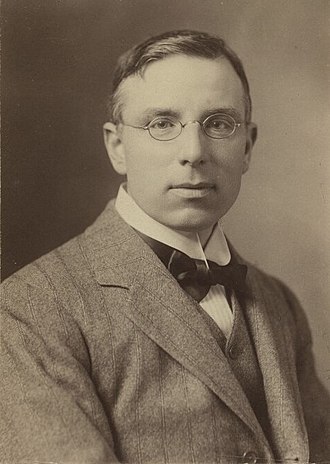
Charles Henry Sims (1873-1928) was born in London the son of a dress manufacturer. A childhood injury to his leg left him permanently lame, which had a profound impact on his life and artwork by leaving him with a sense of being an outsider, and particularly of involvement in physical activity.
He was initially apprenticed to a draper, but wanted to study art and in 1890 enrolled at the National Art Training School in London, and later studied at the Academie Julian in Paris. He returned to London in 1893 and enrolled at the Royal Academy Schools, but expelled in 1895 for his ‘insolence and cavalier ways’.
Going his own way in art, he began to paint outdoor scenes often including children and women in playful activity, as well as bacchanalian scenes, and society portraits. His work became popular and was exhibited at the Royal Academy in 1896 and at the Paris Salon the following year. He married Agnes MacWhirter, the daughter of a fellow artist, in 1897.
Sims had a solo show in 1906 at the Leicester Galleries and was elected a Fellow of the Royal Watercolour Society and a member of the Royal Academy.
In 1914 his eldest son, a midshipman in the Royal Navy, was killed at sea during World War One. This affected him badly and he became a WW1 war artist, painting scenes of devastated landscapes in France, which appeared to have aggravated his mental trauma and a loss of faith and belief in God.
After the war his work became increasingly surreal as he explored spiritual and cosmic themes, in a style similar William Blake. His marriage deteriorated following an extra-marital affair, and he became more isolated and estranged from his family. He committed suicide in 1928 by drowning himself in the River Tweed.