
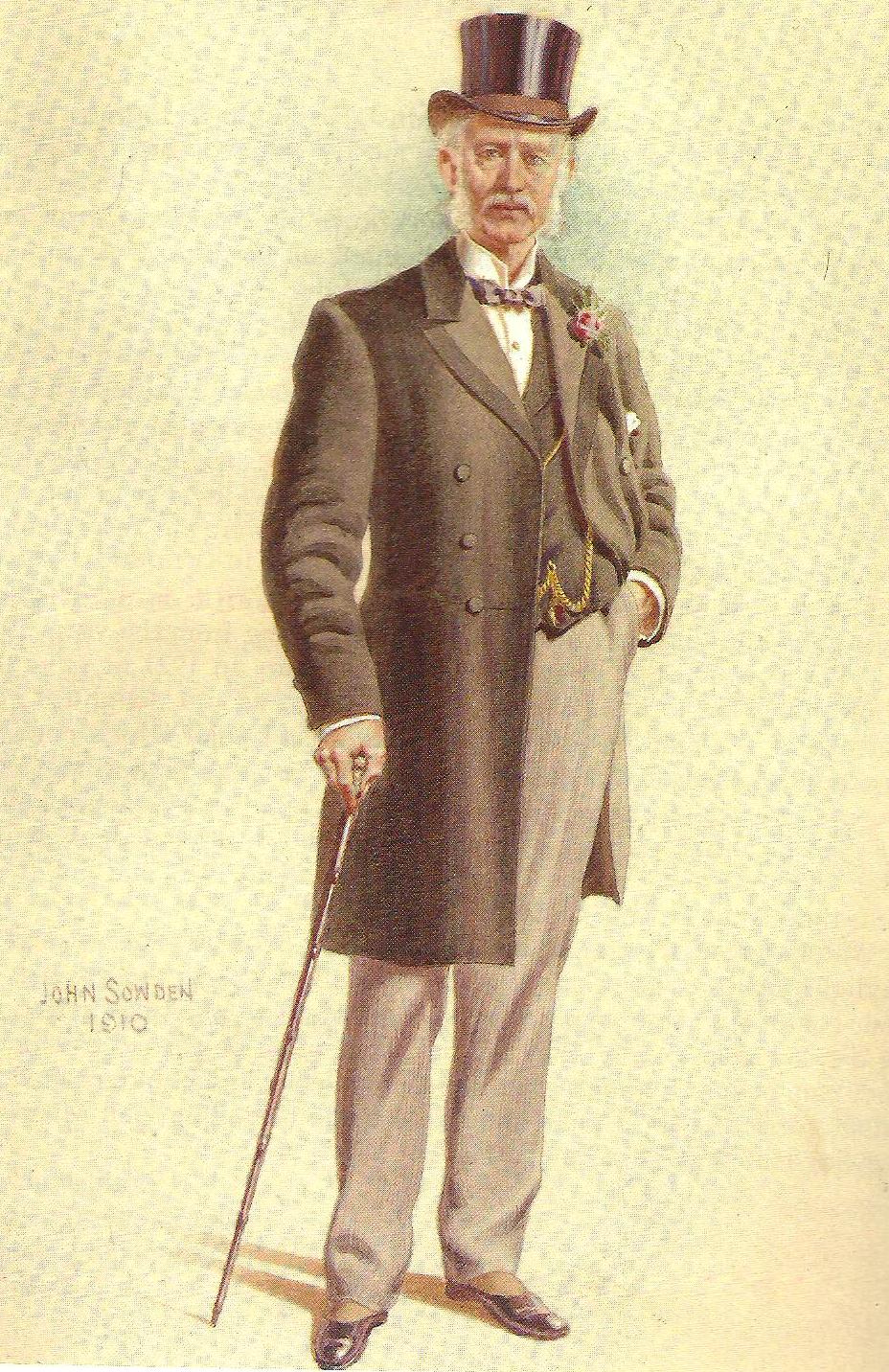
John Sowden: Self-Portrait
John Sowden (1838-1926) was a Bradford born watercolour painter specialising in landscapes, portraits and still life. He is best remembered for a series of paintings of Bradford street characters, and for his paintings of local dignitaries.
John was the son of a local joiner but one who eventually became a wealthy property developer. John was articled into the practice of Bradford architect George Knowles and trained initially as an architect. However, he was a keen artist and also attended evening classes at the Bradford Mechanics Institute, winning prizes for his work there in 1858.
In 1859, he was appointed Art Master at the Institute and later appointed Head of the art section, a position he held until 1901. He was also appointed Second Master of the Bradford School of Design. In the early 1860s, John set up a studio in Stirling Street, off Manchester Road, Bradford, where he committed himself to portrait and landscape painting. Demand for paintings was growing among the new Victorian wealthy in the city, and John, because of his own social position and talent, found plenty of work.
He helped establish the Bradford Artists’ Society of Painting and Sculpture, and later founded and became President of the Bradford Art Society.
Between 1904 and 1906 he acted as Vice President of the Yorkshire Union of Artists and exhibited work at the Royal Birmingham Society of Artists, Dudley Gallery Art Society, Grosvenor Gallery, Walker Art Gallery, Liverpool, Manchester Academy of Fine Arts, New Gallery, Royal Academy, Royal Institute of Painters in Water Colours and at the Royal Scottish Society of Painters in Watercolour.
In 1875 he used his architectural training to acquire and develop inner-city sites which he developed into warehousing and factories for the growing cloth manufacturing industry in Bradford. He continued to paint and the two features of his working life ran on parallel lines, making him a wealthy man.
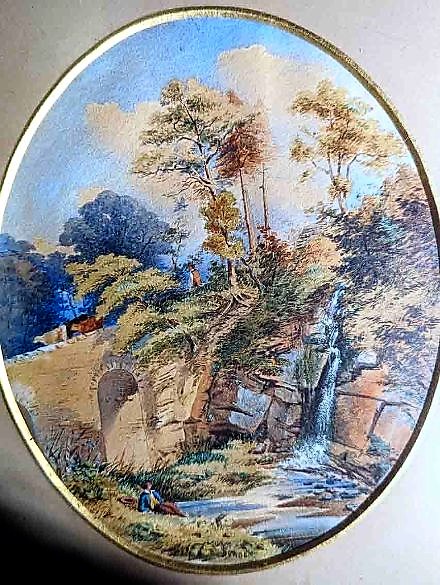
Steeton Beck by John Sowden. c.1890
Despite his versatility as an artist, he is best remembered today for his 300+ portraits of Bradford street characters he painted from the mid 1880s onward. The people in his paintings were local people who struggled to make a living despite their adversities, which included physical disability (see examples below). Sowden’s own wife, Anne, following the birth of their only child, John Russell, and thereafter appeared to suffer from depression and lived as a virtual recluse at their home in Manningham. His difficult home life, combined with his Liberal political views, made Sowden sympathetic toward the plight of others in society less materially successful than himself.
He was also interested in the description of the London poor, as described by Henry Maythew in his book, ‘London Labour and London Poor’, and particularly the numbers of people who worked outside the mainstream of employment. Mayhew had awoken the public to the plight of the poor and casual labour in London with his words; John Sowden wanted to do the same with his art. And as an artist , he also saw the ‘picturesque’ qualities of the subjects and the opportunity they gave him to display this body of original work – original in the sense that portraiture tended to be in the realm of those who could afford their portraits painted, and portraits of ordinary people, particularly of ‘street people’, were uncommon in Britain.
His street character portraits were exhibited locally in 1891, and again in 1897 and 1901, creating much public interest. In 1921 he gave this collection of 358 portraits to the Bradford Museum in 1921 together with his handwritten biographical notes of the ‘worthies’ he had painted.
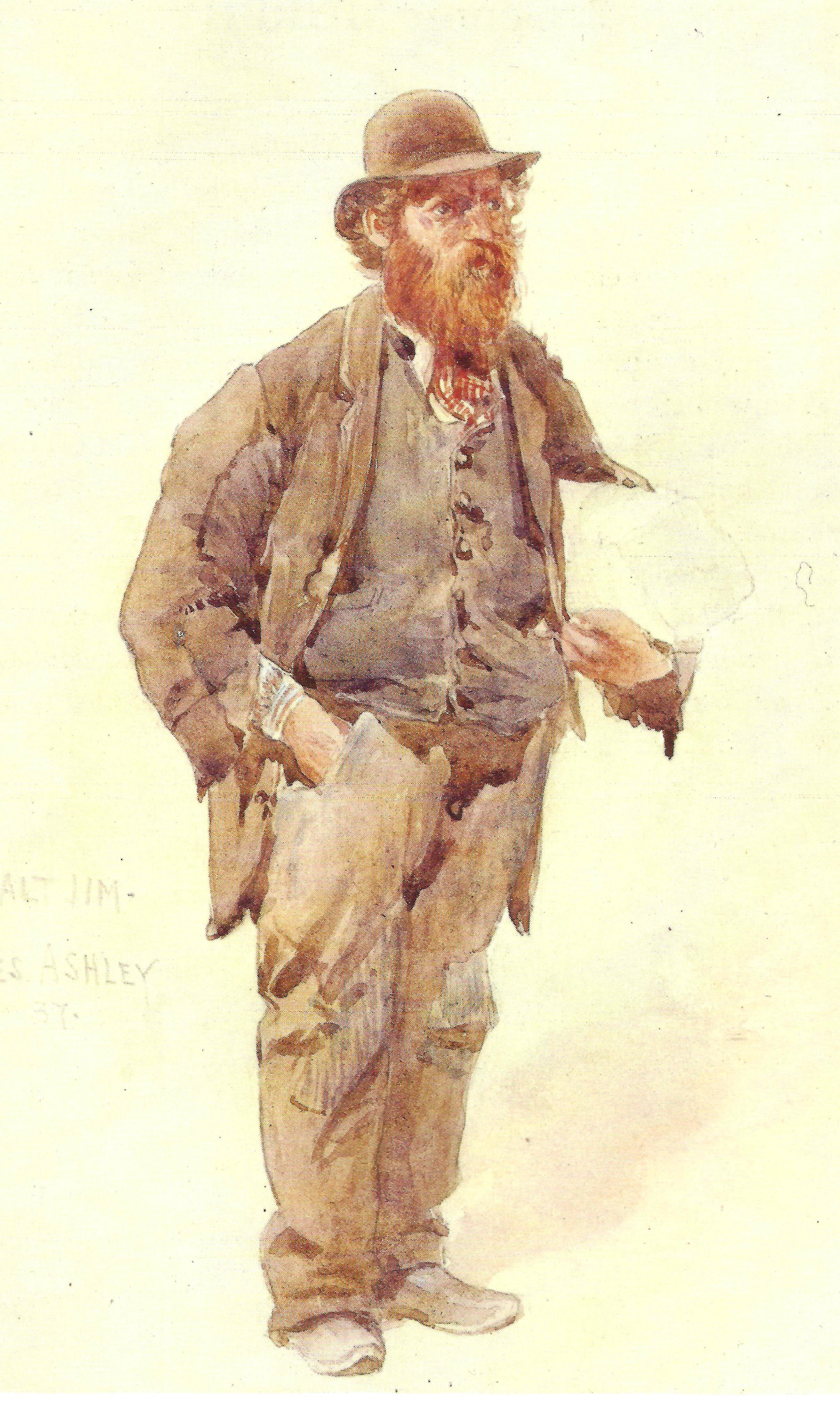

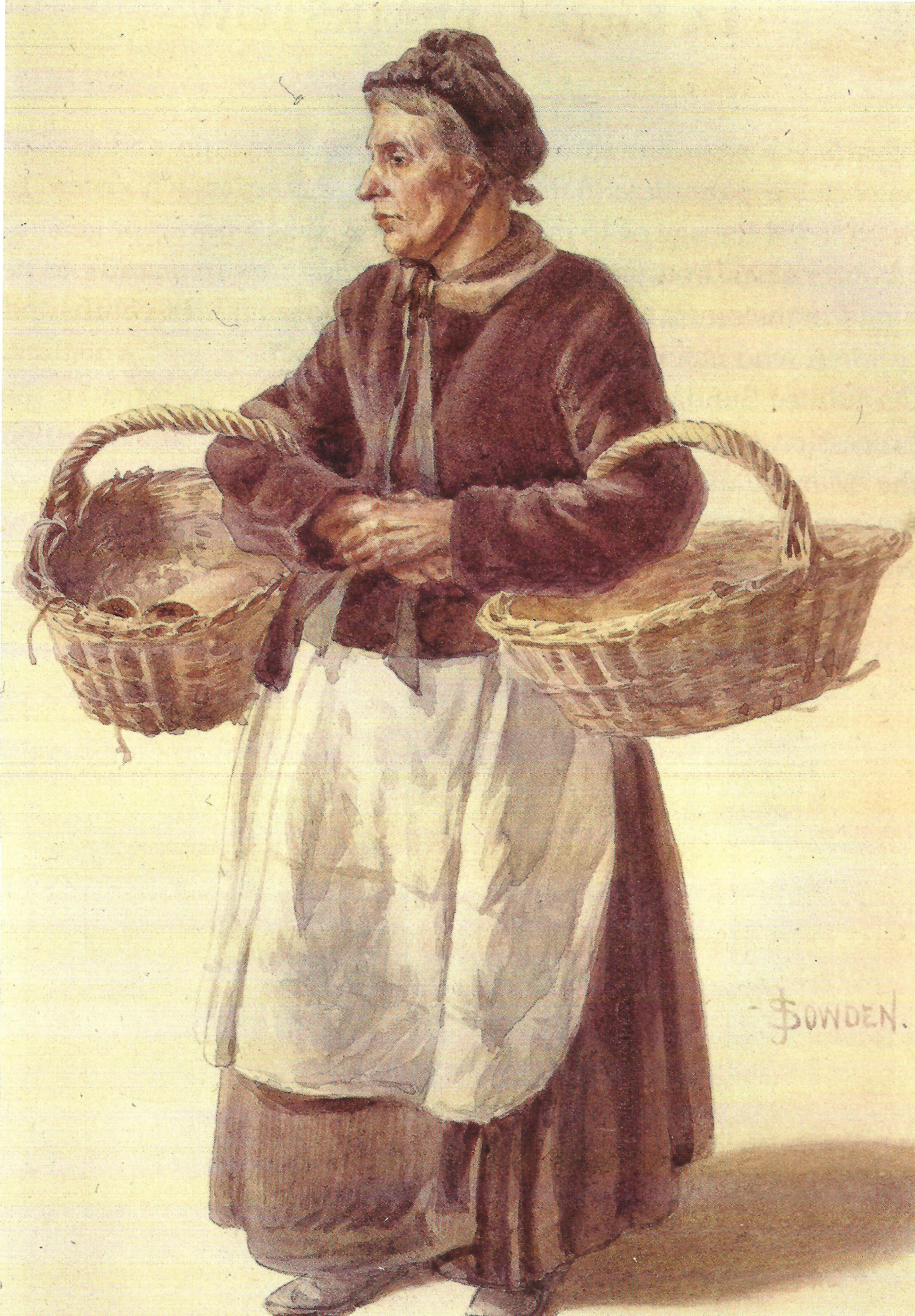


At his death his estate was valued at £48,255 – the 2014 equivalent of more than £2.5 million today.
Source and Recommended Reading:
‘Street Characters of a Victorian City: John Sowden’s Bradford’ by Gary Firth, 1993, published by Bradford Arts, Museums & Libraries Service. (Above images from this book)
Also see my article at http://jaquo.com/19th-century-street-characters/