

Jack Clarkson (1906 – 1986) teacher, painter, sculptor, wood carver was born in Silsden, the son of a clog iron maker. He achieved particular recognition as an artist for his paintings of English Midlands industrial scenes and urban architecture.
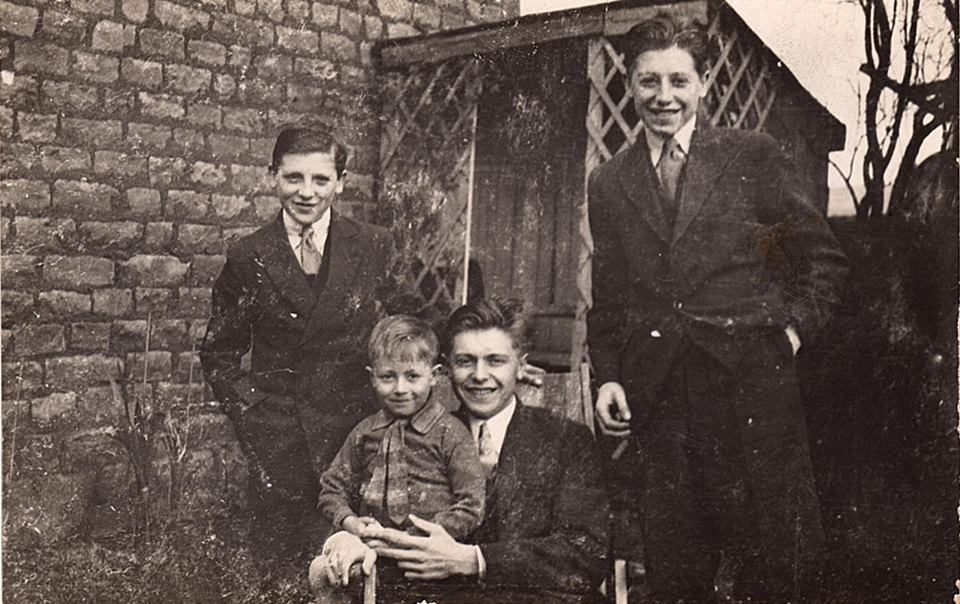
Jack Clarkson, centre, seated, with his brothers in the garden of their Silsden home.
He began his art training at Keighley School of Art, 1921-27, before winning a Scholarship to the Royal College of Art, where his tutors included Gilbert Ledward and Henry Moore. Moore, in particular, was instrumental in influencing his painting and sculpture styles (see the Jack Clarkson sculptural painting example, below).
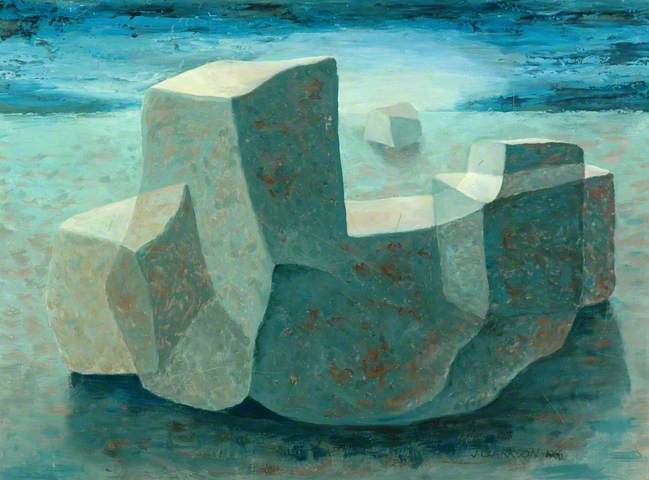
‘Nocturne’. Image: Bradford Museums and Galleries/Art UK
Henry Moore and Jack Clarkson were both from similar backgrounds. Moore was born into a large working-class family at Castleford, South Yorkshire, and had been raised in a similar terraced house to Jack Clarkson. The two men, with only eight years age difference, enjoyed a good tutor-student relationship. Jack Clarkson, writing in 1985, to Roger Berthoud, a biographer of Moore, recalled that:
He taught me to see the human figure not as an outline but in masses, tilting this way and that … At this period we were in the habit of applying clay in pieces (as opposed to the [Edouard] Lanteri ‘lick and spit’ method). We started with great lumps, finally applying small pellets. I am afraid I began to get quite finicky and mannered in this respect, and Moore would say ‘stop clerking, Clarkson.’ This illustrates, I think, his feeling that what mattered most was the form rather than the surface appearance.

Jack Clarkson, in the centre background on his graduation day. Henry Moore is shown, second from right, in company with other RCA tutors. Image: Henry Moore Foundation.
From 1930-1944, Clarkson taught at, and later became Head of the Sculpture department at Sheffield College of Arts and Crafts. In 1945 he was appointed Principal of Newcastle-under-Lyme Art School, a position he held until his retirement in 1968.
In parallel to his teaching career, the industrial landscape and buildings of the Potteries region in Staffordshire inspired many of his own oil paintings. He started to paint these scenes over a decade from the early 1960’s onward, as the Potteries was beginning to show signs of industrial decline, largely the result of cheaper imports of ceramics.
Jack’s paintings represent an important artistic and social perspective of the Potteries on the cusp of significant economic change. The foreground figure shown in the painting below, of a man fishing amidst symbols of work and industry, can be seen as an ironic reminder of the fate of many pottery workers thrown into redundancy, starting at that time, and gaining rapid momentum in subsequent years.

The Canal at Longport. Image:Museums Sheffield/Art UK
Jack exhibited his work widely, including at the Royal Academy, Royal Society of Arts, Mappin Art Gallery, Sheffield, and at The Ditching Gallery, Sussex. His paintings can be found in the permanent collections of the Potteries Museum and Art Gallery; Brampton Museum, Newcastle-under-Lyme; Laing Art Gallery, Newcastle-upon-Tyne; and at Cartwright Hall, Bradford.

‘Jack Century Street’. Image: Hanley Potteries Museum & Art Gallery/Art UK
He also painted a range of scenes depicting the municipal and retail buildings of Newcastle-under-Lyme and neighbouring towns. As some of these were later demolished, his work again offers a useful insight to the architectural history of the region.

Municipal Hall, Newcastle-under-Lyme. Image: Brampton Museum/Art UK
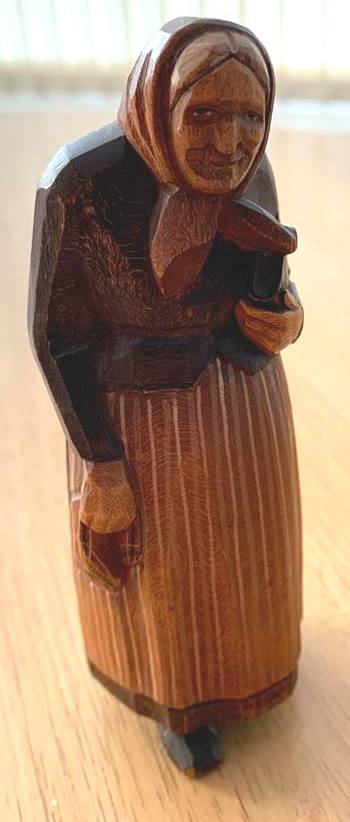
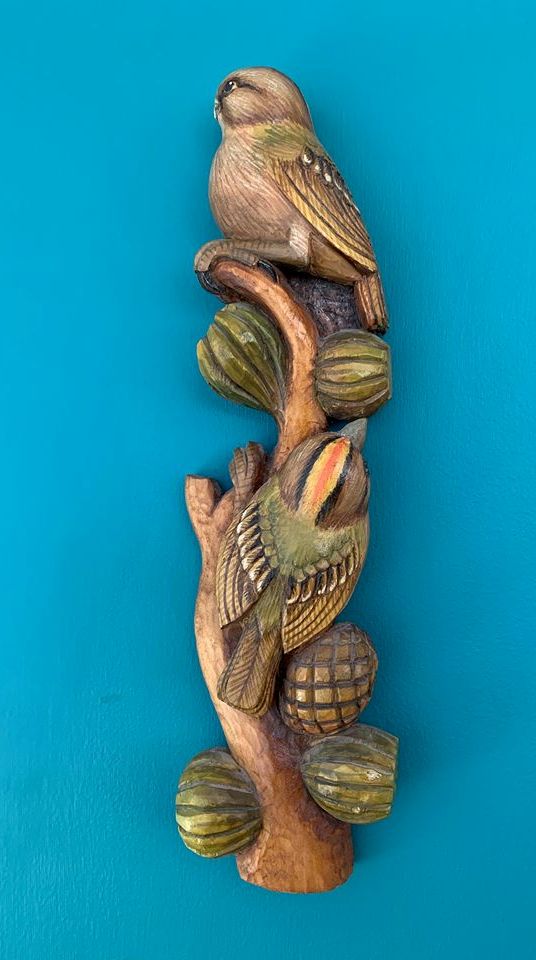
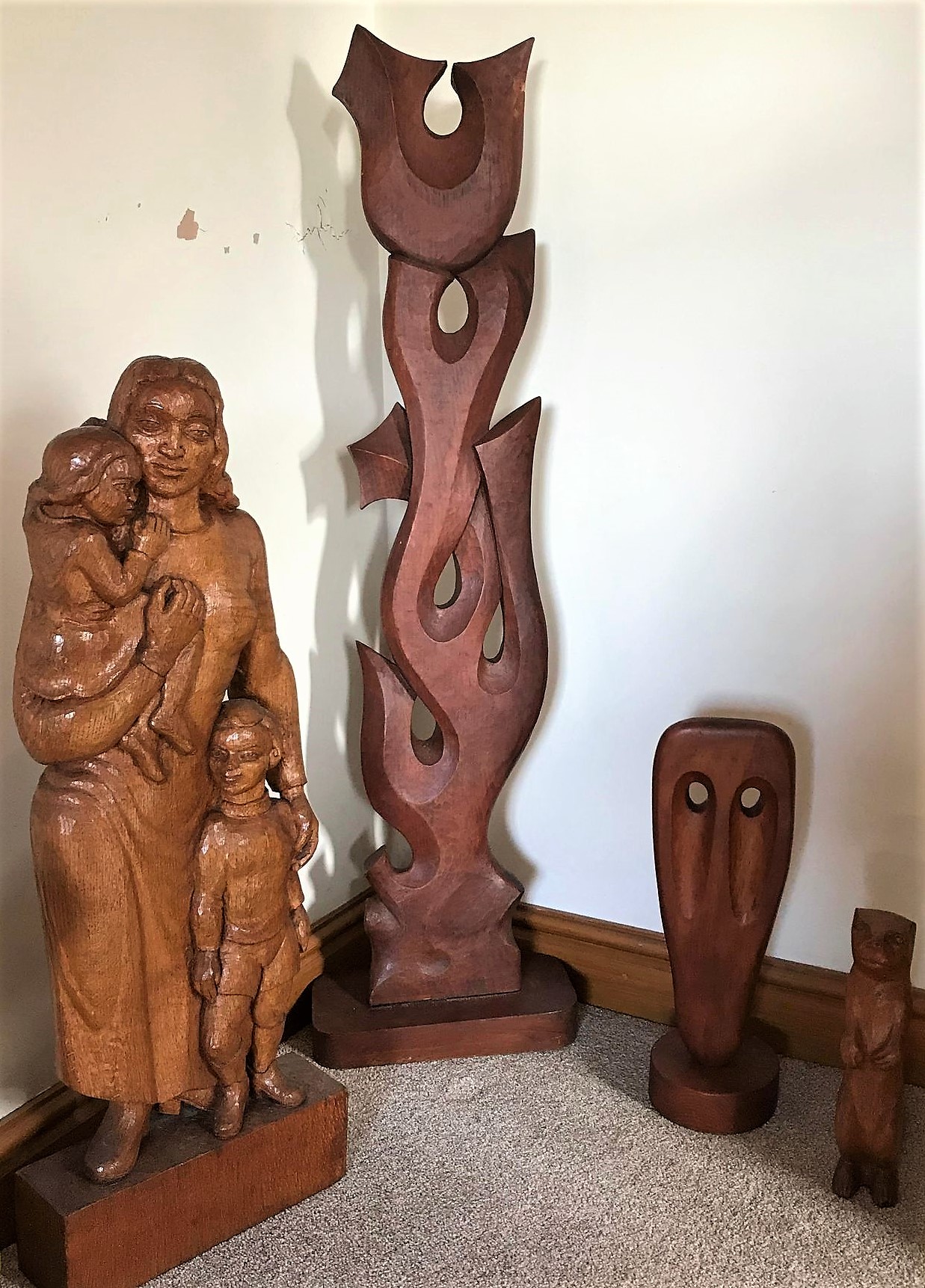
In retirement, Jack continued to live in Newcastle-under-Lyme, devoting his time to wood-carving and still-life painting.
His later-years wood-carving re-awakened his early training and interest in sculpture that he developed at the Royal College of Art.
.

The church of St James, Silsden, has a reredos carved by Jack Clarkson (see below).


The life and work of Jac Clarkson is featured in the book, ‘Past Silsden Artists‘, by Colin Neville; see more information at Past Silsden Artists
(With thanks to Stuart Clarkson and Sam Jones their permissions to use family and artwork photographs for this article.)