
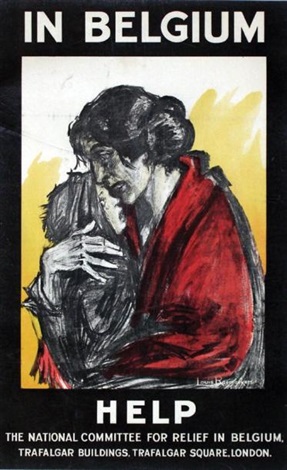
The refugee crisis in Europe from 2015 onward is is a timeless reflection of the impact of war on ordinary people. In 1914 Europe faced a similar crisis when thousands of Belgium citizens were uprooted when their homes were razed to the ground in the early stages of the First World War.
The British government immediately offered hospitality in Britain to the displaced Belgians and sent out a circular to all parts of the kingdom asking for local committees to be formed to look at the possibility of taking in refugees. In Keighley, the Mayor, William Anderson Brigg, instigated the local Belgian Refugee Committee to look at how the town could help. Immediately money, clothing, furniture and offers of rent-free houses were given to the Committee.
On Saturday October 17, 1914, the first twelve Belgian families arrived to a warm welcome from local people at Keighley railway station. A reception centre was established in Spencer Street and from there the families were taken to homes allocated to them, including to Steeton Hall, and rooms above Silsden fire station. A second party of 51 Belgians arrived five days later, and over the next year around 240 refugees arrived in the town.

The photograph above shows one of the first Belgiam refugee families to arrive: the Van Hoorens from Blankenberge. Madame Van Hooren is shown here with her three sons and two daughters. Her husband stayed in Belgium, where he ran a hotel. The youngest son, Francois, second from right, is shown in a British scouting uniform.
Despite local concerns about the ‘endangerment’ to the local workforce, the new arrivals quickly found work in local factories, offices and mills, often filling posts created by men now in the armed services. The official responsible for their integration into the local community found the refugees to be ‘very superior people’, who settled quickly into the local community.
‘Honour to Belgium’
Soon after their arrival, the first batches of Belgians were invited to a free evening at the Keighley Picture House to see ‘The Sign of the Cross’, a silent biblical epic, with ‘specially selected music by an augmented orchestra’. A message was projected onto the screen: ‘Honour to Belgium. Keighley heartily welcomes the citizens of your heroic country.’
Money from local people continued to support the Refugee Committee and when the fund finally closed in 1917, Keighley had raised over £5,000 – a considerable sum in those days. The Keighley News printed a weekly supplement of local events in Flemish, and slipper baths and cinema shows were free for the Belgians, although the Keighley Temperance Society raised objections to a weekly beer allowance!
Such was the interest and sympathy locally for the Belgians that a local sculptor, Alex Smith, (shown below) was moved to carve a wooden sculpture, ‘Refugees‘, to symbolise the impact of war on non-combatants.
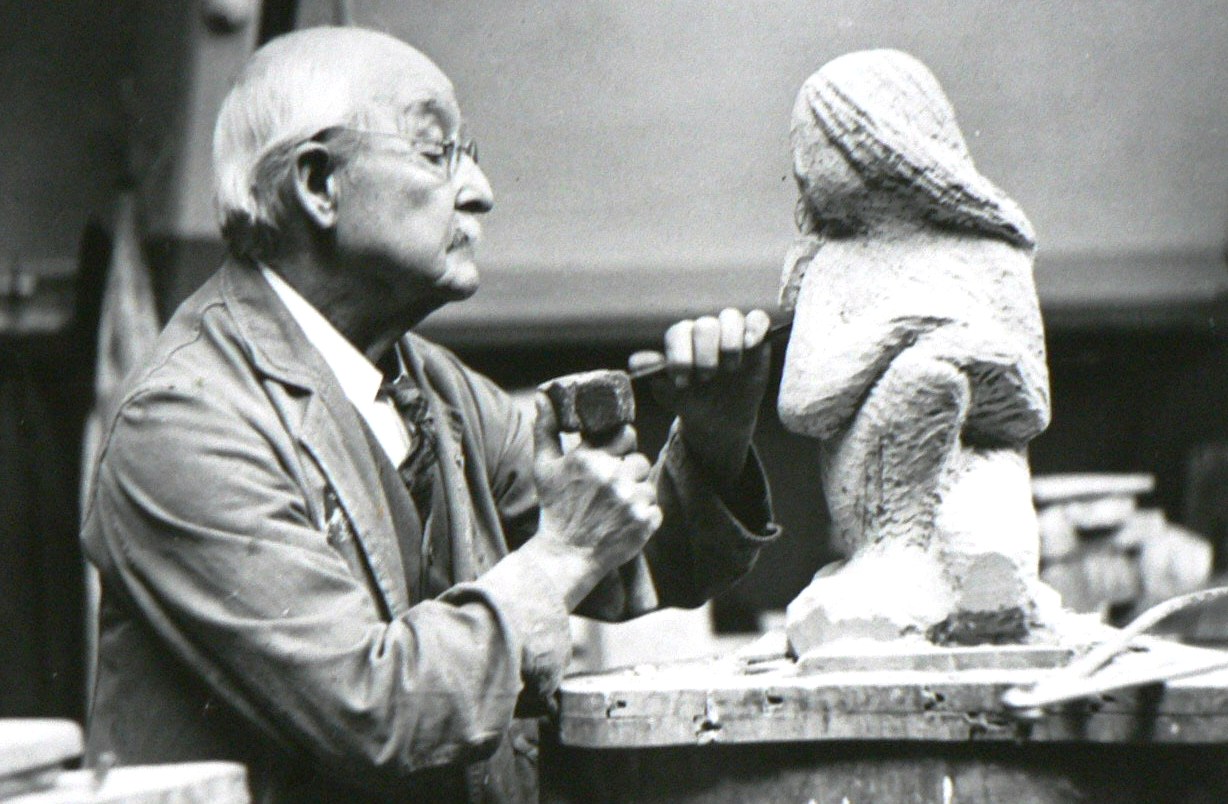
Alex Smith’s statue stands today on a plinth in the entrance to Cliffe Castle.

As the war progressed, numbers of the refugees returned home, particularly when the Belgian Government began to encourage their subjects to work in France, but the last families did not leave the town until February 1919. Many of the Belgians stayed in contact with their hosts, new friends and colleagues for years afterward.
In total over 250,000 Belgian refugees came to Britain during World War One, and over 90 per cent returned to Belgium, although some stayed after marrying locally or establishing themselves in new careers in Britain.