
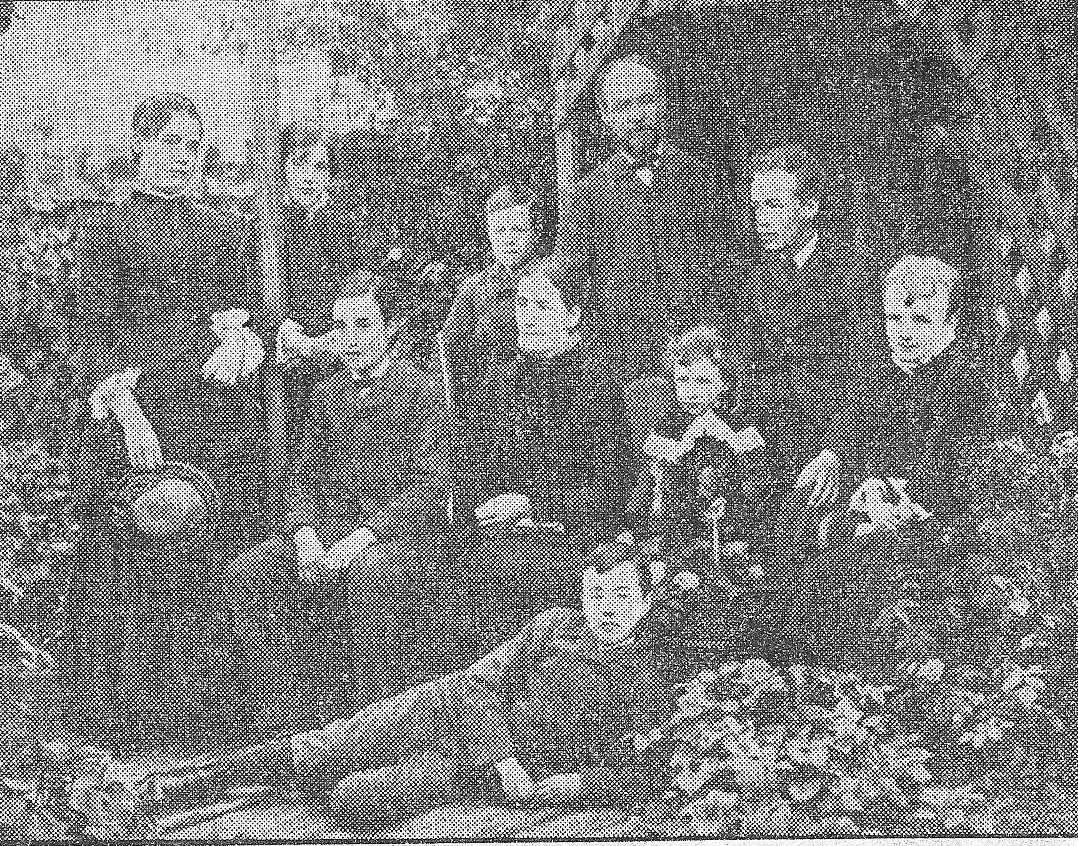
William is seated, left of picture, next to his step-mother, Martha, and some of his siblings. His father, Edward, is standing in the back row. Photograph circa 1886.
William Capeling Stevens (1870-1911) – he signed some of his paintings with the middle name, ‘Capling’, but the birth record shows ‘Capeling’ – was born at Fairweather Green, Bradford. His parents were, mother, Eliza, and father, Edward Stevens, a cashier and book-keeper. The ‘Capeling’ was a past surname on his father’s side, with Edward’s family having their origins in Kent.
By 1881 the family, made up of parents and eight children, was living at Ivy Road, Shipley, but had moved by 1901 to 15 Maddocks Street, Shipley, on the border with Saltaire. William’s mother, Eliza, had died in 1876, when he was six, and his father subsequently married a local-born woman, Martha Bawn, in 1878.
William studied art at the Saltaire School of Art, where he showed an aptitude for oil and watercolour painting. From Saltaire, he moved to London to live and to study, most likely with a scholarship, at the National Art Training School in South Kensington (later renamed The Royal College of Art).
During his stay in London he became a supporter and member of the New English Art Club; a group that championed a less formal, more naturalistic style and approach to painting, and particularly painting in the open air, as opposed to studio work.
In his lifetime, William’s work was exhibited at the New Gallery, London, and later at at the Walker Art Gallery, Manchester City Art Gallery, and at a Royal Society of British Artists exhibition.
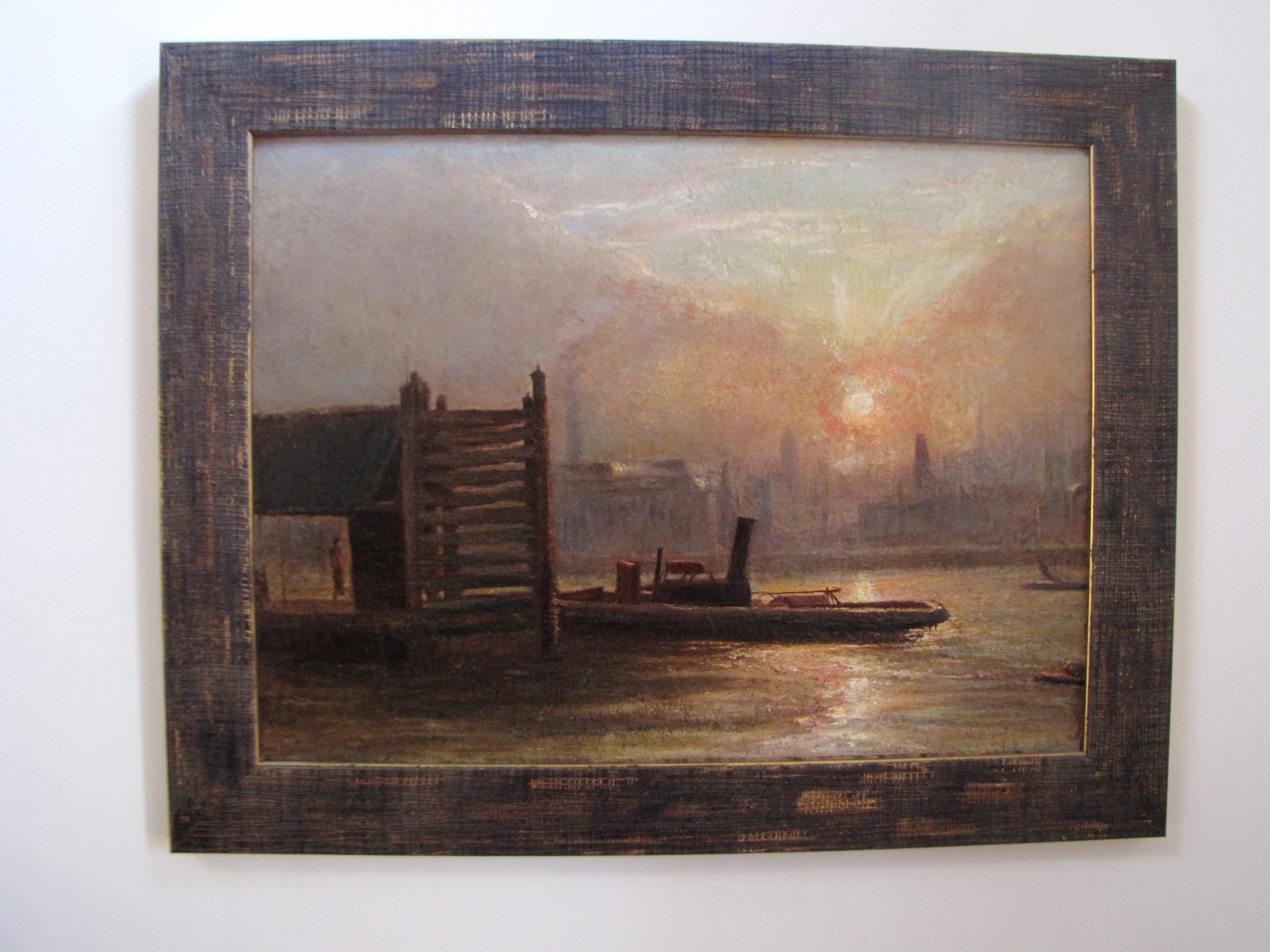
Oil painting, dated 1898, possibly of the River Thames at Rotherhithe (image: by courtesy of Tim Abbott & family, USA).
William returned to Yorkshire and at first lived with his family at their Ivy Road and Maddocks Street addresses. William soon became a familiar figure on Shipley Glen and elsewhere in the district making sketches. By preference, most of his scenes were of the Airedale and Wharfedale landscape, and Scarborough seascapes, but he was also a gifted portrait painter, when occasionally commissioned by local people.
Later, Sir James Roberts, of Salts Mill, gave him the sole use of a rented house at 23 Albert Terrace, Saltaire, to live in. It is believed that William’s studio was in Dale Street, Shipley, a short distance from his Saltaire home.
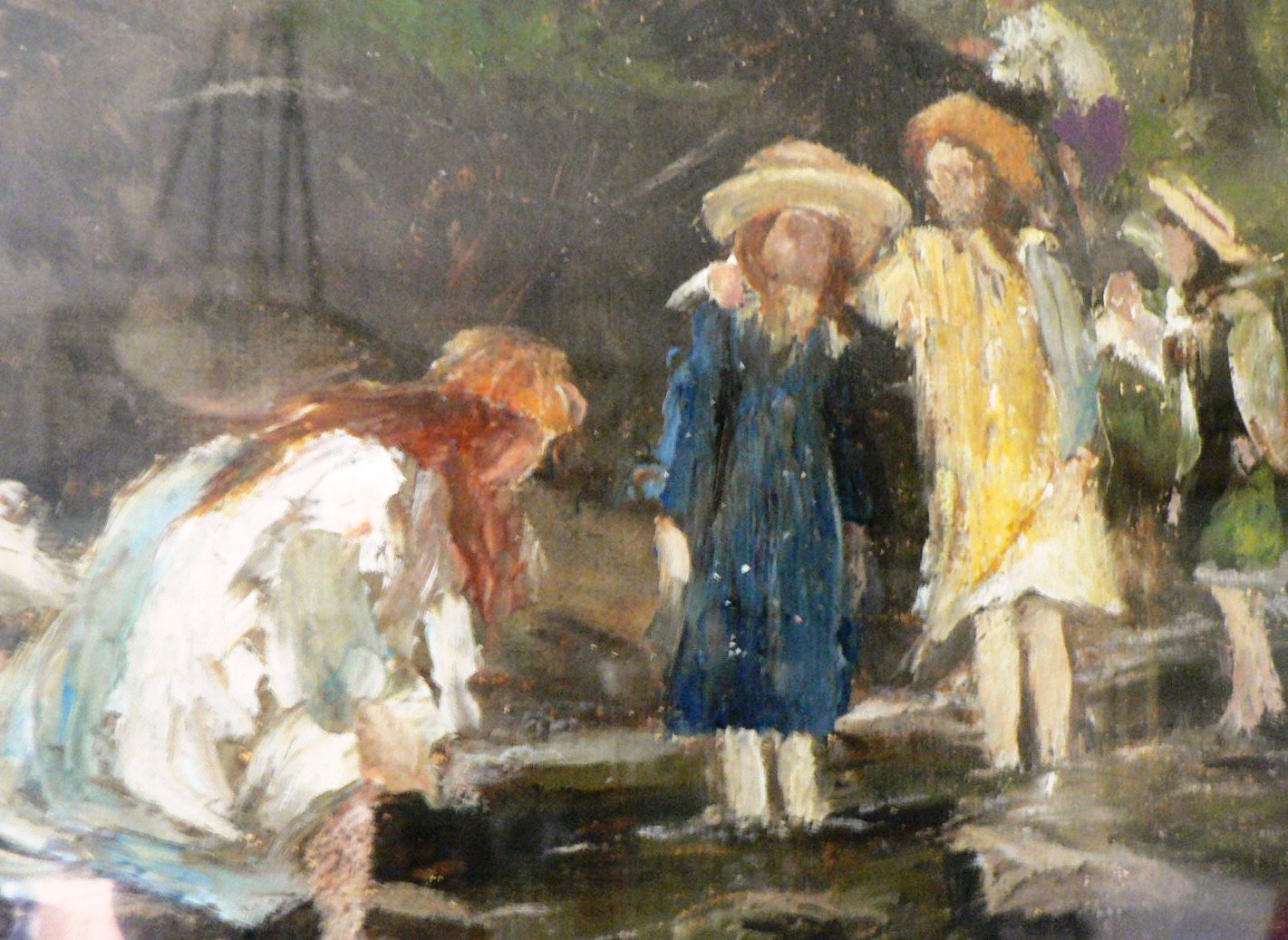
An impressionistic work by William Stevens. In a private collection.
However, he was mercurial in temperament and could behave in unpredictable ways. His younger step-sister, Minnie, in a newspaper interview in the early 1950s, said of William, that in addition to his ability as a painter, he was also a talented carver of ivory and wood. She said:
He loved flowers, little children, and everything beautiful…. He was talented with his brushes, but so very eccentric. He used to say “Money won’t buy my pictures” and carry it to the length of denying himself necessities in order to buy materials he wanted. Often he would refuse to eat anything except brown bread and green apples.
She recalled how ‘Willie’, as he was known in the family, was sensitive about his unfinished work, to the point that, on one occasion, when he discovered that his father had showed one of his unfinished studies to a visitor, William had furiously slashed the canvas with a knife.
On another occasion, according to Minnie, when William had been commissioned to paint a portrait of a successful Shipley builder, the builder brought some friends along to see the painting. They made the mistake of rummaging through other unfinished art work in the studio, infuriating Stevens, who threw them all out and cut the portrait into strips, parcelled it up and gave it to the maid at the builder’s house (source: Telegraph & Argus, Bradford, 21 Oct, 1970).
As a result of his eccentric flashes of behaviour and generally retiring nature, he rarely sold work that was not commissioned, and it was reported that when in particularly dire financial straits, he would dig the garden of a friend for a payment of vegetables, and would often pay his rent to Salts Mill in pictures.
On the 9th January 1911, a rent collector, having unsuccessfully tried to collect rent from Stevens for five weeks, began to make enquiries among his neighbours in Albert Terrace. His immediate neighbour, Ellen Thornton, looked through a curtain gap in a downstairs window to see Stevens slumped naked in the corner of the kitchen.
The police forced an entry to the house and found the artist dead. He had been apparently trying to wash himself, but had collapsed; a bowl of water, soap and a towel were nearby. The postmark of unopened letters suggested he had been dead for up to 3 weeks, including over the Christmas period.

William Capeling Steven’s home and studio at Albert Terrace, Saltaire. It overlooks Shipley Glen, where he would often go to paint.
An inquest held on the 10th January at the Shipley Council Offices heard from Edward Stevens, the artist’s father, who told the coroner he had not seen his son for 3 months, despite the fact he lived in Maddocks Street, only a few minutes walk from him. The neighbour, Mrs Thornton, said she had last seen Stevens alive on the 18th December, stating that the artist was ‘A very reserved man and scarcely spoke to or noticed anyone’. He used to play the violin every evening until midnight, she added.
A doctor who examined Steven’s body reported to the inquest that he believed the cause of death was a cerebral haemorrhage and the jury decided the cause of death was by natural causes and ‘apoplexy’ was recorded on the death certificate. The district coroner, E.H. Hill, noted with regret that Stevens had lain dead in the house unnoticed for so long, but accepted that his very reserved behaviour had meant people had kept their distance from him.
But, despite the fact that the police had found fruit, jam and money in the house, a rumour spread in the area that the artist had died of starvation, which was reported in a 1970 newspaper article, noted earlier, and recorded in the 1976 edition of ‘Yorkshire Artists’. It perhaps fitted a stereotype of the ‘artist starving in his garret’, particularly one that even a family member perceived as ‘so very eccentric’.
After his death, his house was found to contain scores of paintings, many unfinished. A friend of Stevens, a Mr Bertram Heaton, of Shipley Glen, bought most of finished paintings when they were auctioned. In 1970, Bertram Heaton, toward the end of his life, arranged a one-man show of his friend’s work at Bradford Central Library. Over 40 works were shown and the Telegraph and Argus reported that:
Stevens has been unjustly overlooked as an artist. Several of his landscapes have been mistaken for Turners and his excellent portraits reveal his warm humanity.
Another commentator from Bradford Cental Library also observed:
Steven’s art is impressionistic though not extreme, and the natural scene is always subdued or tempered to light and weather. He is delighted in the colours of the skies at sunset, and if the English landscape was sometimes dull with cloudy days, misty or rain, then it was there in Steven’s paintings.
***
After publicity generated by this website in the local Telegraph and Argus and Keighley News newspapers in August 2015, over 60 of paintings by Stevens were found to be still in the possession of relatives of Bertram Heaton. These included portraits, still life, local landscapes and some seascape views of Scarborough.
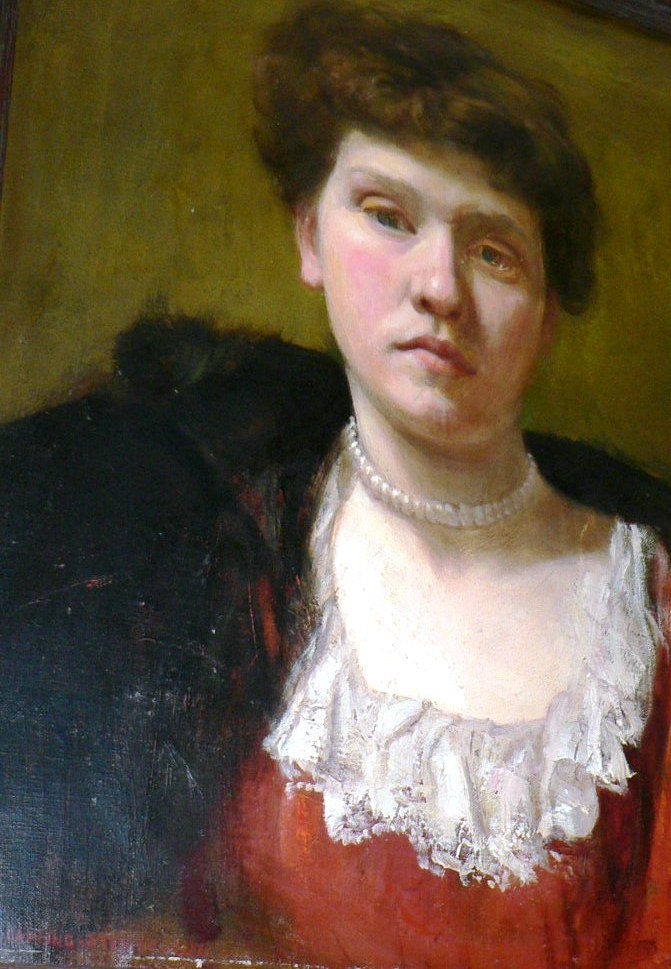

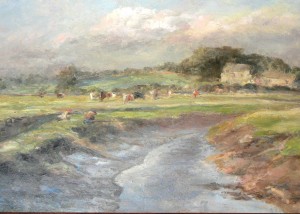

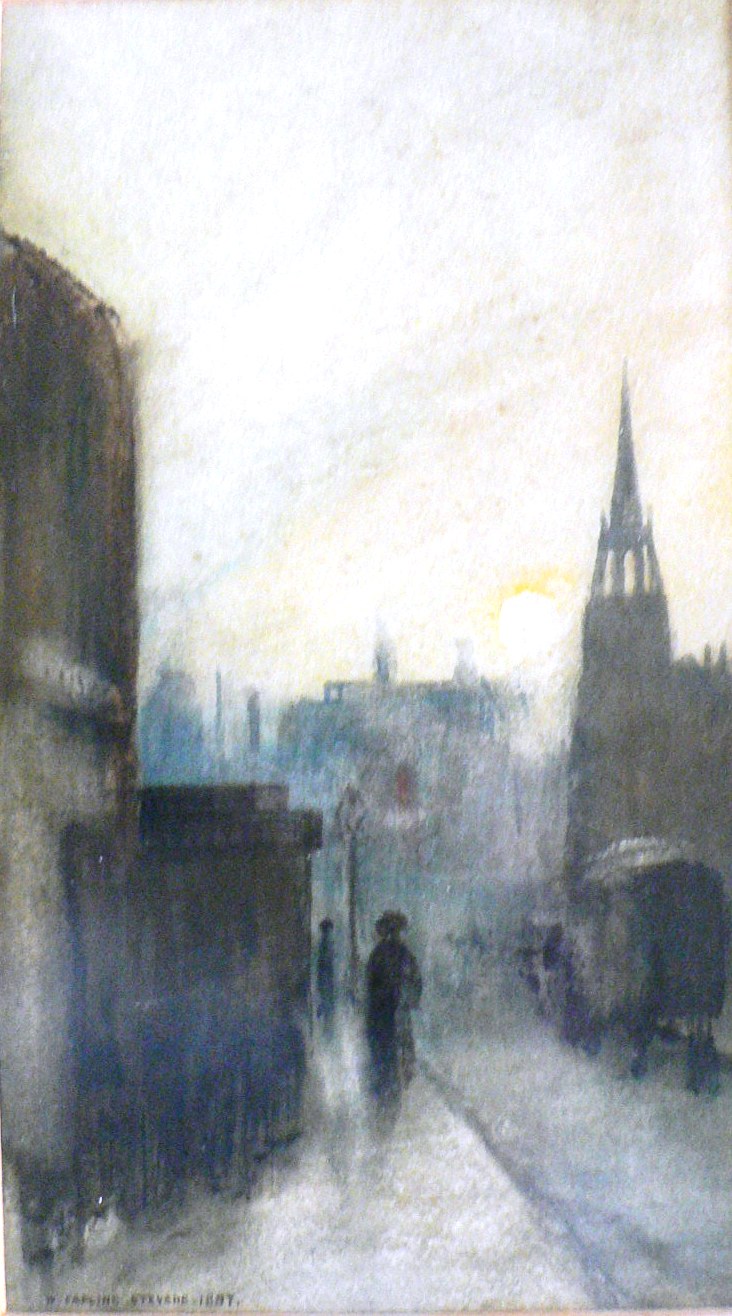
A small selection the paintings are shown here, by courtesy of the descendants of Bertram Heaton.
Bradford Cathedral displayed a selection of the artist’s work, including the images shown here, as part of their ArtSpace programme during April-May, 2018.
Duality
William’s work – and personality – presents a duality of possible interpretation. His traditional study at the National Art Training School can be seen in his formal portraits, with its attention to detail, whilst his more impressionistic land and sea images show the influence of the New English Art Club on his work.
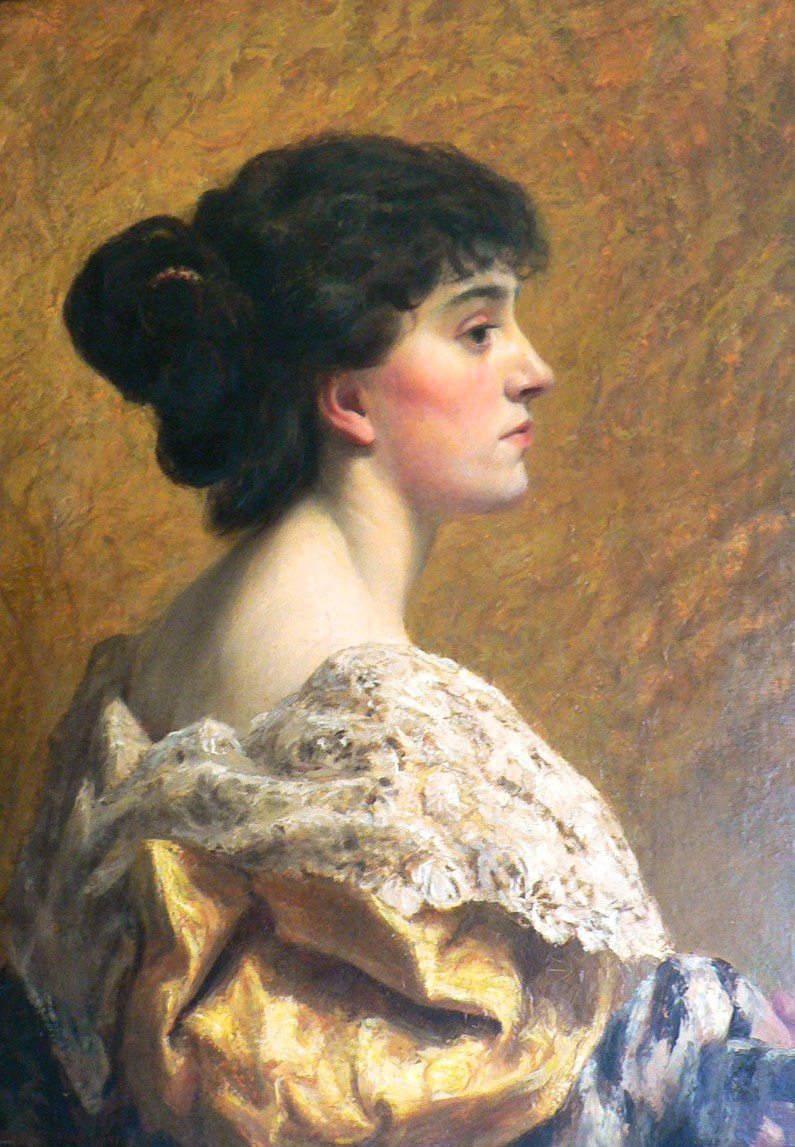
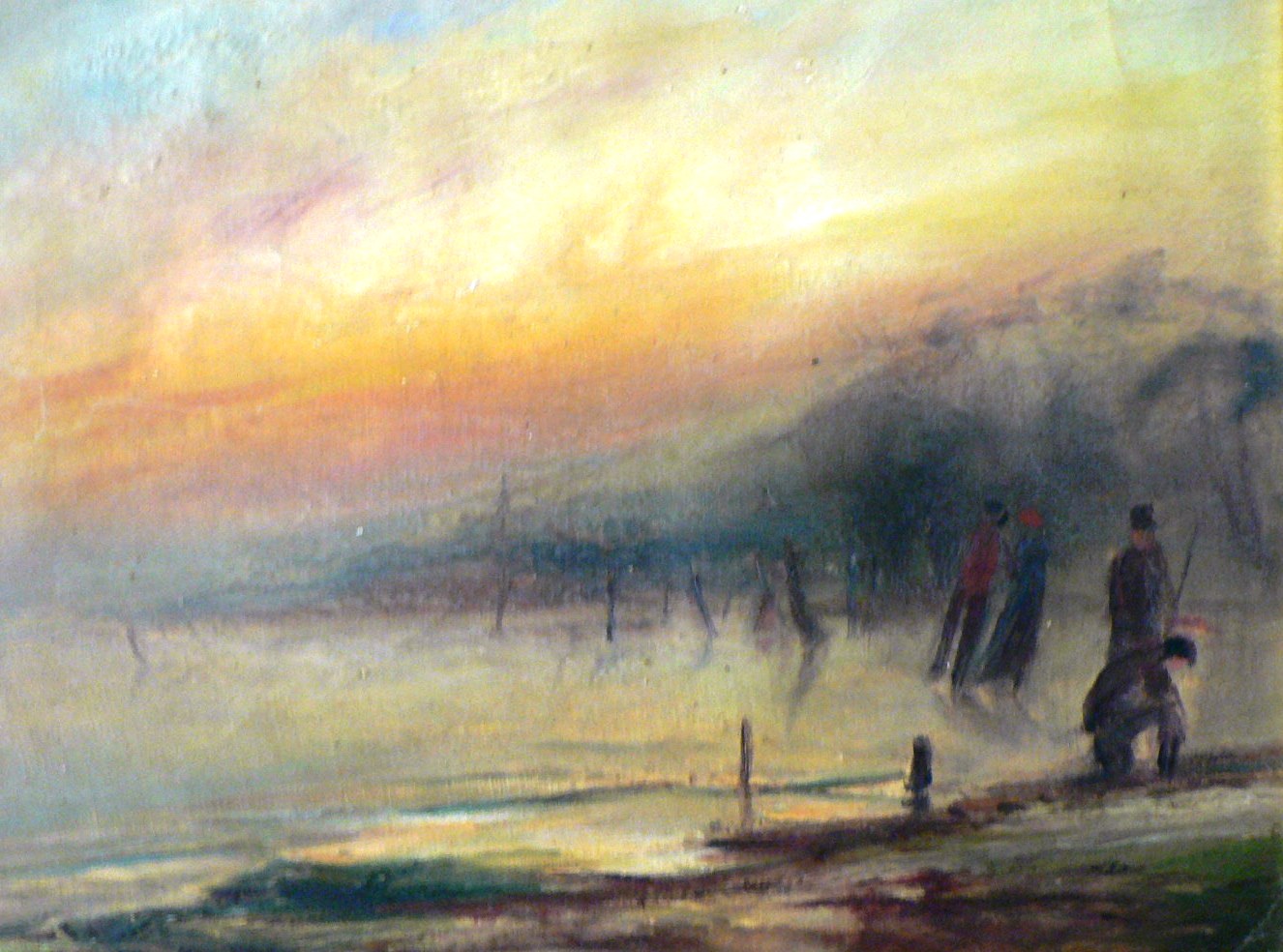
In his personality too, there is, arguably, the same duality. William Stevens was described by his immediate neighbour as ‘a very reserved man’ [who]’ scarcely spoke to or noticed anyone’. He appeared to have been alienated from his family at the time of his death. And his step-sister, in later life, wrote of his eccentricity (see earlier).
Yet, William Stevens was able to produce portraits that captured the essence of personality and humanity of his sitters. He could also gain the friendship of others, sympathetic to his work, and in particular, Bertram Heaton, who bought and would later champion William’s paintings.

Bertram Heaton. Image: courtesy of Mr John Lambert, grandson of Bertram.
Bertram Heaton, in a newspaper interview said of William (Yorkshire Post, 30/10/1970):
As a youngster I was walking through some fields when I saw Willie and a friend of his sketching. From then on our friendship grew, though he was a quiet, unassuming man. It was he who really introduced me to art through the marvellous pictures he painted.
In early 2021, another anecdote of William, that again questions the ‘recluse’ image of the man, was supplied by Caryn Loftus. She writes:
‘He was a friend of my mother’s grandparents, Herbert and Harriet Simpson, who lived at Baildon Bridge, Baildon. This is what she remembers’:
“It was ‘open house’ for William on a Saturday to join my grandparents for a meal. He gave my grandparents ‘Sunset on the Thames’ on my grandmother’s birthday and two paintings of bluebells in Hirst Woods, a pencil portrait of my grandmother and a lovely sketch of a man on a bridge.”
Postscript
If William Stevens lived in Saltaire today it is unlikely he would be perceived as eccentric. The village, over the last three decades, has become a flourishing centre for the Arts, with an annual Arts Trail, and with many freelance visual artists and other creative people living and working there.
But in 1910 it was a much different place, with most houses occupied by local textile workers, clerks and others in the service industries, William would have stood out. His lack of sociability and flashes of eccentricity are likely to have reinforced a perception of him there as ‘reclusive’.
So, a ‘quiet and unassuming man’ (Bertram Heaton), or one talented, ‘but so eccentric’ (step-sister, Minnie). People respond to others at different levels according to the situation they are in – and the way others treat them. Perhaps William was, indeed, ‘reserved and reclusive’ to those who were wary of him and found it difficult, or made no attempt, to communicate with him. But equally there is evidence that he was able to offer generosity and friendship to those who made an effort to understand him and, perhaps importantly, appreciate his artwork.