
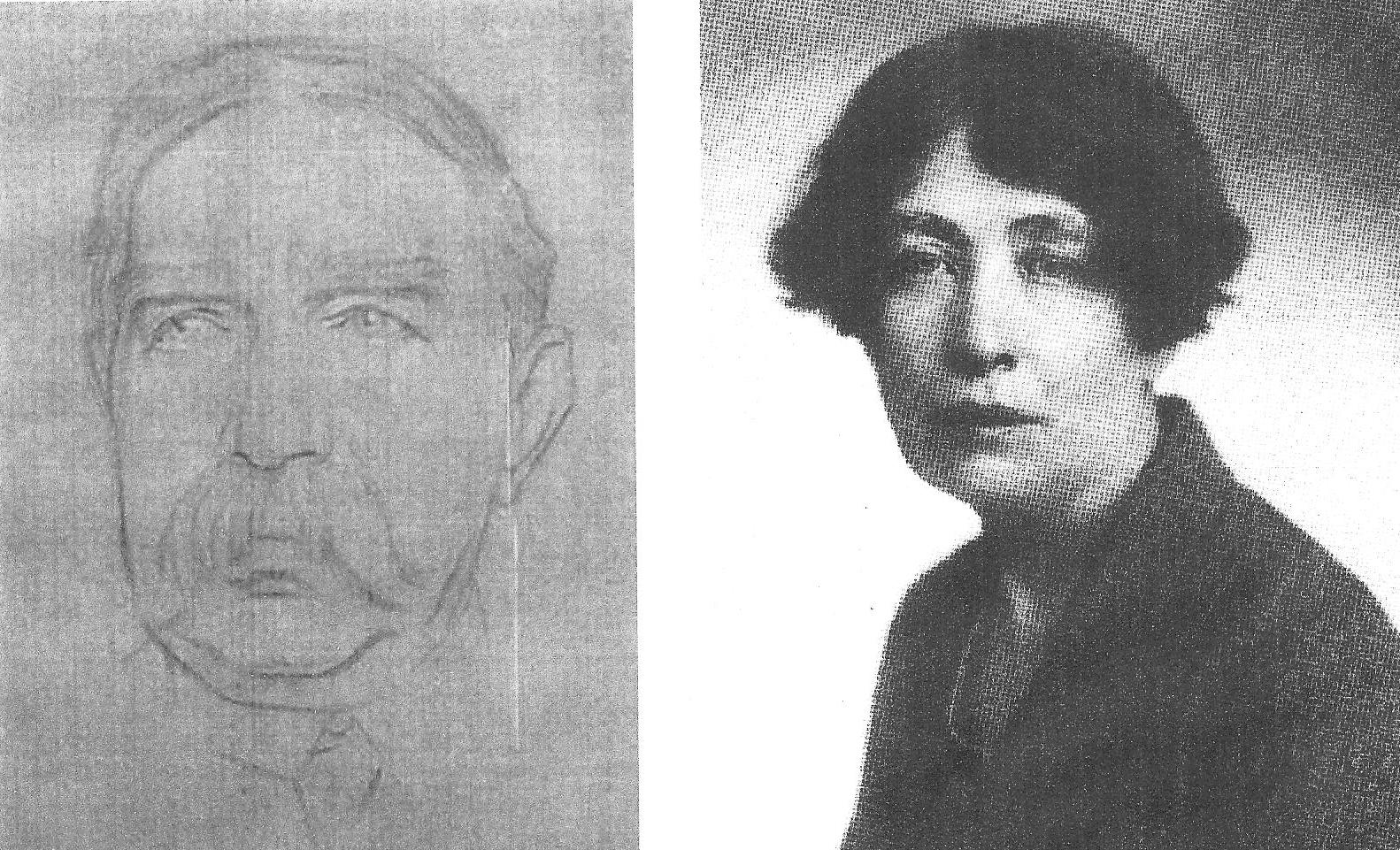
Perhaps he was just having a bad day. But the first meeting in 1906 between Silsden-born Augustus Spencer, Principal of the Royal College of Art (RCA), and art student and Suffragette, Sylvia Pankhurst, eventually led to a difficult, if not traumatic, period of tenure for him at the College.
In 1900 Augustus Spencer was a man on a mission. He had been appointed as Principal of the RCA, with a view to implementing the reorganisation of the college, launched the previous year. He had a strong motivation to succeed in this task, as between 1881-84, Augustus had been a student himself at the college, describing the teaching then as ‘slow, vicious, feeble and antiquated’ (Frayling, 1987).
Augustus was also a man of strong opinions and action and this had led to his appointment in 1888, at a relatively young age, as Head of the Leicester School of Art, where he had gained a reputation for efficiency. The RCA had only recently been given, in 1896, its ‘Royal’ prefix, being previously known as The National Art Training School, and the Board of Education wanted to harness Spencer’s strength of character and energy to drive the college forward as a beacon of excellence in art training. To this end the Royal College had reorganised the curriculum into four main divisions: mural and decorative painting; sculpture and life modelling; commercial design; and architecture.
Augustus Spencer threw himself with energy into the post, appointing new staff, negotiating pay-rises for instructors, and seeking more teaching space. He was also responsible for teaching the theory and practice of education to all students and appointed his brother, Beckwith Spencer, to teach history of art and literature – a decision that would later rebound on him.
Although the RCA at that time saw its role as primarily a teacher training institution, it also had inherited a role for the vocational training designers for industry or for students who wanted to pursue other applied art routes. All students were expected to follow a common curriculum in their first term, involving all four art divisions, before choosing a specialism in a vocational area, e.g. teaching, design, painting. Whilst this was in principle a sound idea, the way it was implemented upset some students – Sylvia Pankhurst, for example.
In 1904 Sylvia Pankhurst gained a two year National Scholarship to study at the RCA. She had applied there from Manchester School of Art, where she had been awarded the ‘Best Woman Student Prize’ and a Travelling Scholarship to Venice for her mural designs. She had subsequently gained a commission to paint murals for the newly-built hall of the Independent Labour Party in Manchester. She had then, a strong sense of her own worth as an artist.
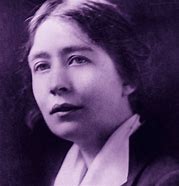
Sylvia Pankhurst. Image: Spitalfields Life.
She arrived at the RCA with high hopes, and in particular with the desire to paint murals and make banners in support of social reform. But she found her first few months at the RCA a shock – the London teachers were ‘far less sympathetic’ and reported that she ‘… was sad that she received none of the genial encouragement, which had been a feature at the Manchester school, but [instead] rather scathing criticism’ (Pankhurst, 1979).
Sylvia had also failed to notice that she was required to take a preliminary architecture course in the daytime, leaving only the evenings for life drawing that she and some other students preferred. She went to see Augustus to ask if she and others could do figure drawing in the daytime, leaving their evenings for architectural history.
Instead of explaining that the limited resources of the college could not accommodate her wishes, the Principal, according to Sylvia, ‘brusquely ordered her from his room’. This would have been a lapse of manners and judgment by anyone at anytime, but given Sylvia’s involvement with the Suffragette Movement, it was a bad mistake on his part. Sylvia later recalled that she ‘resented his manners, and thereafter when she and he met they glared at each other … like savage dogs’ (Pankhurst, 1979, p.47).
More problems for Augustus Spencer quickly followed. Another source of conflict arose from Sylvia’s allegation of discrimination against women students in the RCA allocation of scholarship and prizes. At other British art colleges, the identity and gender of students submitting work for prizes and scholarships was typically concealed to the judges. But at the Royal College it was Augustus Spencer who made the final decision. The result, it seemed, was that, although many women students entered the college on two year scholarships, few received additional RCA scholarships to fund advanced level work for an additional three years. Sylvia learned too, that it was ‘normal practice’ in the painting school at the college to award only one internal scholarship to a woman.
Sylvia persuaded her friend, the Labour MP, Kier Hardie, to raise the matter in the House of Commons in the form of a Parliamentary Question. Augustus subsequently reported that under his administration three out of sixteen scholarships in 1905 had been awarded to women. This gave Sylvia and her friends grounds to argue that this ‘ratio had no relation to the actual proportion of merit between the sexes in the college’ (Pankhurst, 1979, p.47). This incident undoubtedly put negative attention on the college in a way that must have sounded alarm bells at the Board of Education about Augustus’ management.
Augustus had little experience of communication on equal terms with women. He was a bachelor, without female siblings, and was one of eight sons in his Silsden family. Almost all his teaching colleagues at the RCA were men and by 1912 only two women teachers had been appointed.
Sylvia, with her strong feminist views, must have been completely alien to his experience and expectations. The years 1904-06 also saw the start of militant Suffragette action, with Emmeline Pankhurst, Sylvia’s mother, disrupting a Liberal Party meeting in Manchester and the first arrests in London and elsewhere. Given the attention in the press at that time, Augustus must have been aware of this at the time of his first encounter with Sylvia.

Augustus Spencer, seated centre, with staff and the RCA football team. Image: courtesy of the RCA.
In 1906, after two years, Sylvia’s scholarship expired and she left the college to pursue her Suffragette activities, including artwork for the cause. But she was to return in 1911 to the RCA in a way that threw more negative attention on Augustus’ management of the college.
By 1910/11, although the college had prepared many students for responsible roles in education and industrial design, the Board of Education was concerned with the high drop-out rates from the college. During 1910 -11, for example, a third of fee-paying students had quit their studies during the first term and a further 25 per cent stayed only one year. In total only around a quarter of all students completed their courses (Frayling, 1987, p.79).
This was partially linked to a related concern about the poor levels of literacy among some students, particularly those that had left school at 13 in order to concentrate on art training in regional art colleges. The RCA students were undoubtedly a very mixed bag of talent and general educational ability, and the issue now for the Board of Education was about the future direction of the college.
During 1910/11 the Board of Education subsequently launched an enquiry into the direction and administration of the RCA. In the course of the enquiry, the investigating committee spoke to students about their experiences. When Sylvia heard about this she immediately joined a deputation of seven recent graduates, all of whom had been on the course at the same time as her.
Sylvia and her colleagues complained about the compulsory aspects of the curriculum, the distribution of internal scholarships, and the way in which Augustus Spencer made allegedly biased recommendations for and against the employment of graduating students. They also complained about nepotism shown by Augustus for employing his brother, Beckwith Spencer, at the college, and compulsory attendance demanded at Beckwith’s history of art and literature classes, which they complained were poorly taught. Augustus’ actions also came under criticism after he had questioned the need for a Matron at the College, whose role was to supervise the welfare of the women students.
Most devastating though, was the students’ verdict on Augustus himself:
That seeing it is generally felt that the organisation of the Royal College is unsatisfactory and that we, the students, found the Principal to be neither an artist nor a sympathetic organiser, we respectfully wish to ask, since we have suffered the system, in what way does he merit the position he now holds as Head of the Nation’s School of Design (Frayling, 1987, p.76).
The comments that Augustus was ‘neither an artist’ must have been particularly hurtful to him, as he had always been a practising artist, with a slant toward painting traditional landscape scenes, in his free time.

Landscape by Augustus Spencer. In a private collection. Image: AskArt
The enquiry was the beginning of the end for Augustus Spencer and accelerated the move in the longer term toward making the college a post-graduate centre of art. Toward the end of Augustus’ tenure, a visitor to the college noted:
… the place had the look – and even the smell – not of an art school, but of an inferior elementary school: the members of staff whom I happened to see resembled clerks, the retiring Principal wore a morning coat, and the students seemed to have sunk into apathy (Frayling, 1987, p.93).
These comments were not completely unbiased, as they were made by John Rothenstein, son of William Rothenstein, who took over from Augustus, but they were, nevertheless, telling.
In 1920 Augustus decided to retire; it was time to go. He died a few years later.
Sources:
FRAYLING, C. (1987). The Royal College of Art. One Hundred & Fifty Years of Art & Design. London: Barrie & Jenkins.
PANKHURST, R. (1979). Sylvia Pankhurst. Artist and Crusader. New York & London: Paddington Press.